
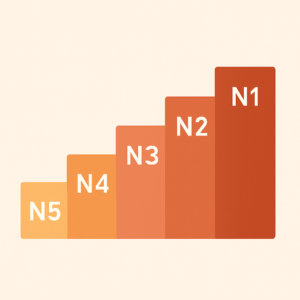
The Japanese Language Proficiency Test, or JLPT, is the most widely accepted certification for Japanese language learners. It has five levels, starting from N5 for beginners up to N1 for advanced fluency. Each level reflects more than just language ability – it represents career readiness and global potential.
N5 and N4 cover basic grammar, simple vocabulary, and day-to-day conversational ability. These levels are ideal for beginners who are starting their journey and want to understand everyday Japanese. Even this foundational knowledge can be helpful in entry-level job roles or for travel and study prep.
N3 represents intermediate proficiency. At this stage, learners can follow news headlines, handle everyday workplace conversations, and read more complex materials. Many Japanese companies and job recruiters start considering applicants from this level onwards.
N2 is the most in-demand level for professional opportunities. It demonstrates the ability to understand business documents, reports, and formal communication. If you want to work in a Japanese corporate setting or represent a company in global business, this level is often expected.
N1 is the highest certification and shows complete fluency. It is useful for those pursuing research, academic roles, legal translation, or interpreting. It also opens up the opportunity to teach Japanese or work in government or diplomatic roles.
Each JLPT level is a milestone. Whether you aim to work in Japan, collaborate with Japanese teams, or simply stand out in a competitive job market, this structured path helps you grow in both confidence and career value.